
News
Annuals Showcase Day at ŠHVU Celje 2024

On Thursday, June 20th 2024, the conclusion meeting of the annual plant trials was organized at the School of Horticulture and Visual Arts Celje (ŠHVU). The trials aimed to evaluate the growth and development of various seasonal plant species from different breeders when planted in pots, and balcony containers.
In early May 2024, we planted pelargoniums, surfinias, verbenas, impatiens, and dipladenias in both pots and balcony containers. The plants came from multiple breeders: Syngenta and Elsner PAC, Lazzeri and Gruppo Padana, provided by three horticultural companies: Picount, Vrtnarstvo Božič, and Vrtnarstvo Hlebec. Special substrates were donated from Njiva d.o.o. and used for planting pelargoniums, surfinias, and impatiens, while dipladenias and verbenas were planted in classic peat-based substrates, also supplied by Njiva d.o.o.
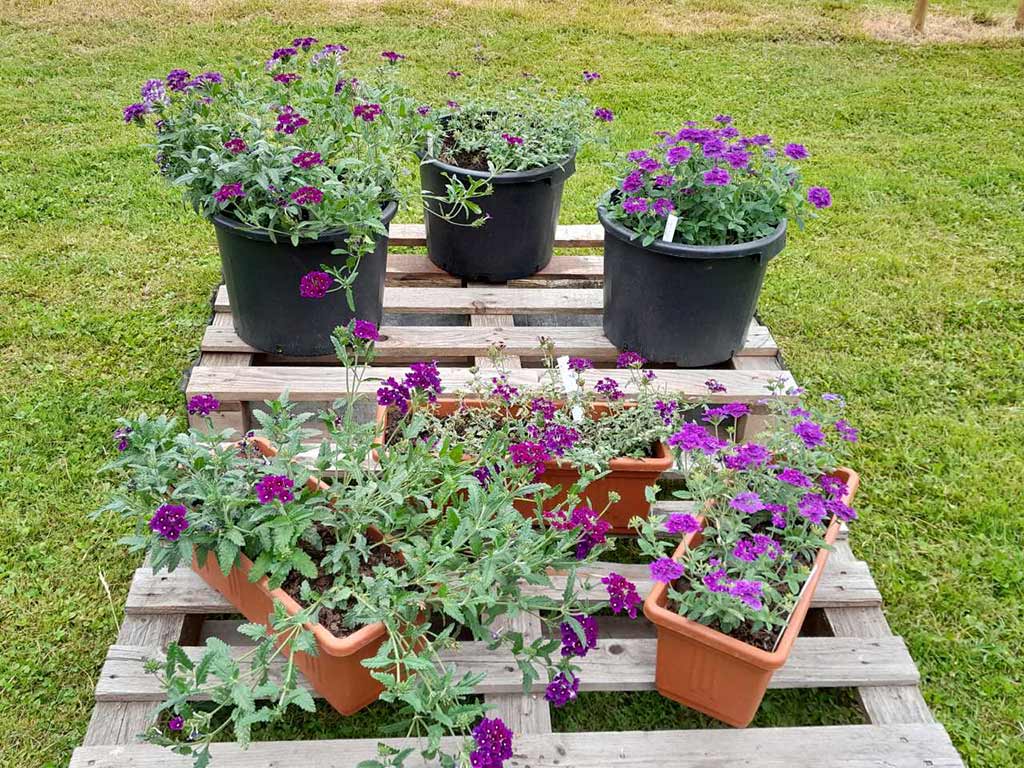
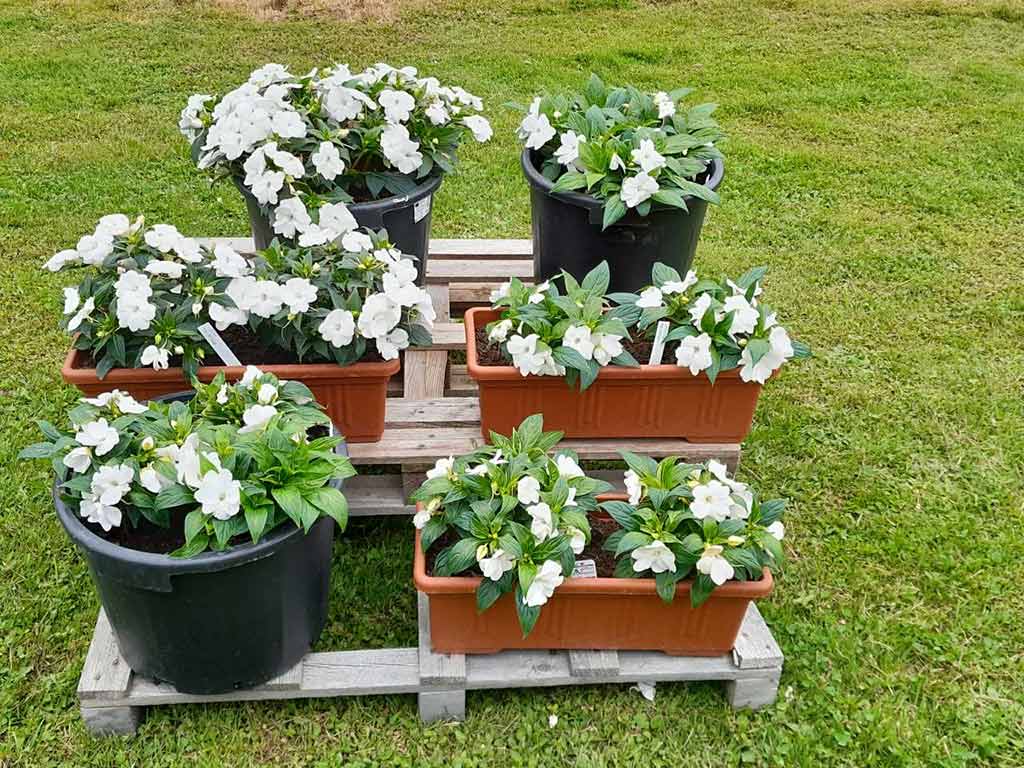
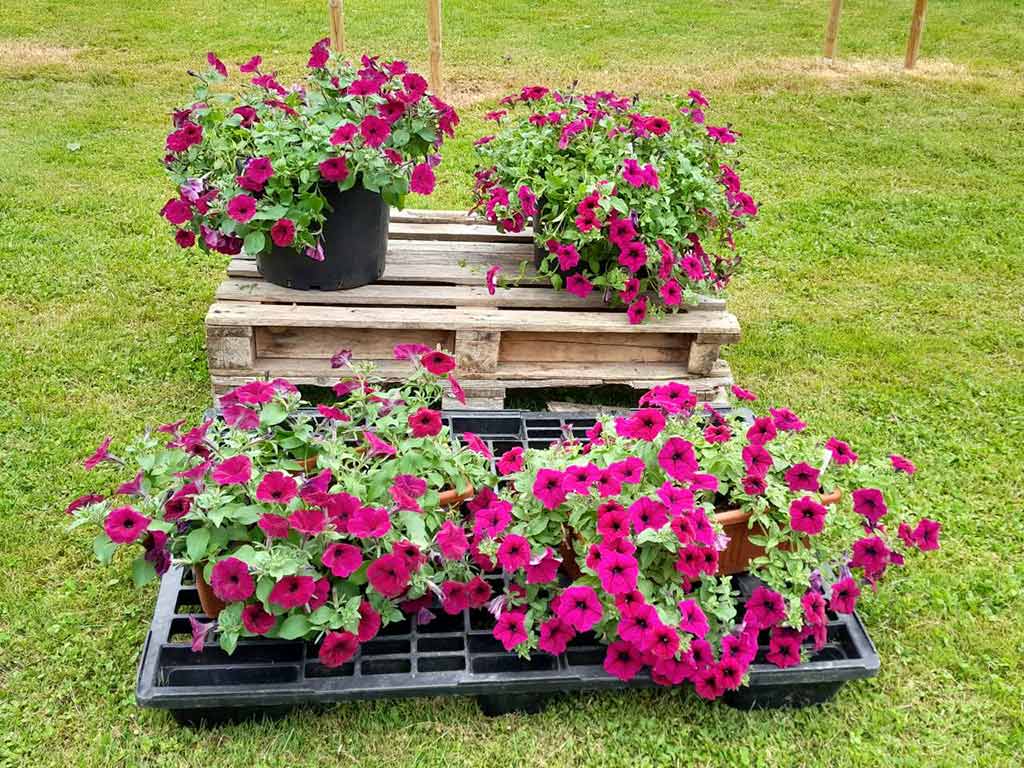
Until the joint trial day in June, the plants were grown in ŠHVU’s greenhouse. Watering was done manually as needed, and weekly fertilization was applied using a 0.2% solution of Rosasol (14-10-25+2MgO+ME) from Njiva d.o.o.
The Importance of New Varieties
Achieving adequate plant compactness at the selling point is one of the most important traits for most annual plants. For many years, growth regulators—chemical inhibitors that slow plant growth—have been widely used to meet this standard. In the effort to reduce chemical use in horticulture, there is increasing interest in methods to achieve adequate plant compactness without—or with reduced use of—growth inhibitors. One promising approach is the use of new plant varieties that naturally grow slowly and therefore develop a more compact form. During our trial visit, we particularly discussed this approach in the case of verbenas and impatiens, where the experiment included several varieties with the same flower color but differing growth vigor.
New Compounds for Substrate Mixes
Peat-based substrates still dominate in the production of seasonal plants, although for many years there has been a strong search for peat alternatives. Various materials are being tested, but many come with significant limitations. Our discussion focused on coconut coir, which is widely trialed for this purpose. The main issues with coir are that it must be imported to Europe, generating transport costs and additional environmental impact, and its preparation requires large amounts of water for washing. Even when using coconut, therefore, we move away from truly eco-friendly production standards.
Text by prof. dr. Gregor Osterc
