
News
Field report: Site visit velenje
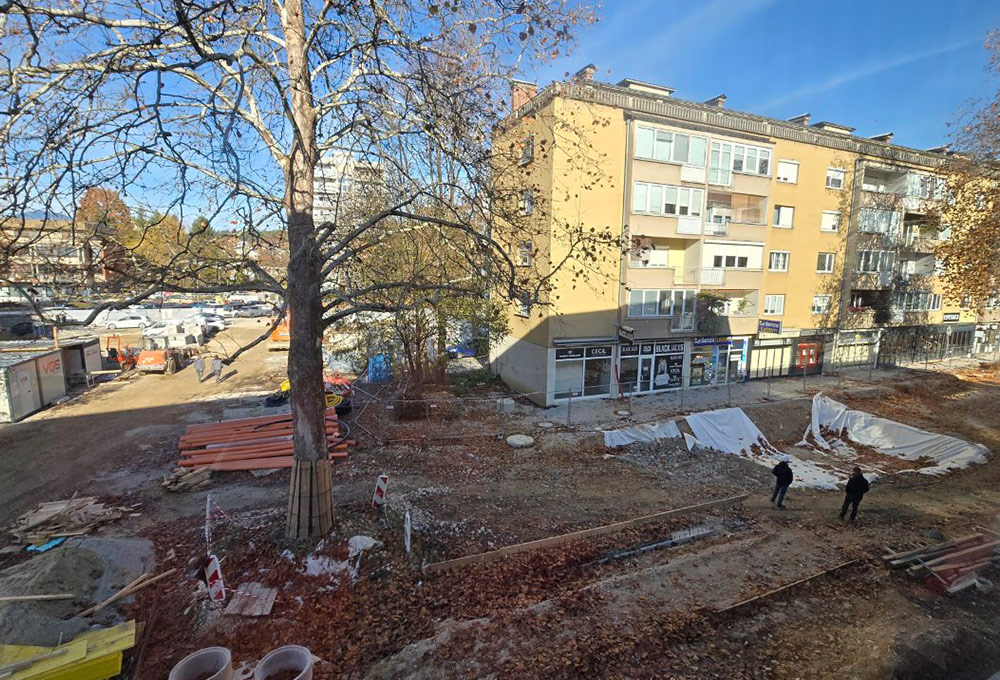
Renovation of Velenje city centre between ambitious goals and on-site challenges
During the March site visit, around 35 participants toured the central green areas of Velenje, where a comprehensive renovation of the city centre, including part of Cankarjeva Street, has been underway since last year. The project is among the larger urban open-space renovations in Slovenia. The investment, estimated at just under €5 million, is part of a broader sustainable mobility project co-financed by the European Union. Completion is scheduled for early autumn 2026. The works include the renewal of paved surfaces, upgrading of utility infrastructure, installation of new urban equipment, and new planting schemes. A particular emphasis is placed on preserving mature trees and introducing modern solutions for stormwater retention and reuse. The group was guided through the completed phases of the project by Nataša Dolejši, MSc, who participates in the renovation as an arboriculture expert.
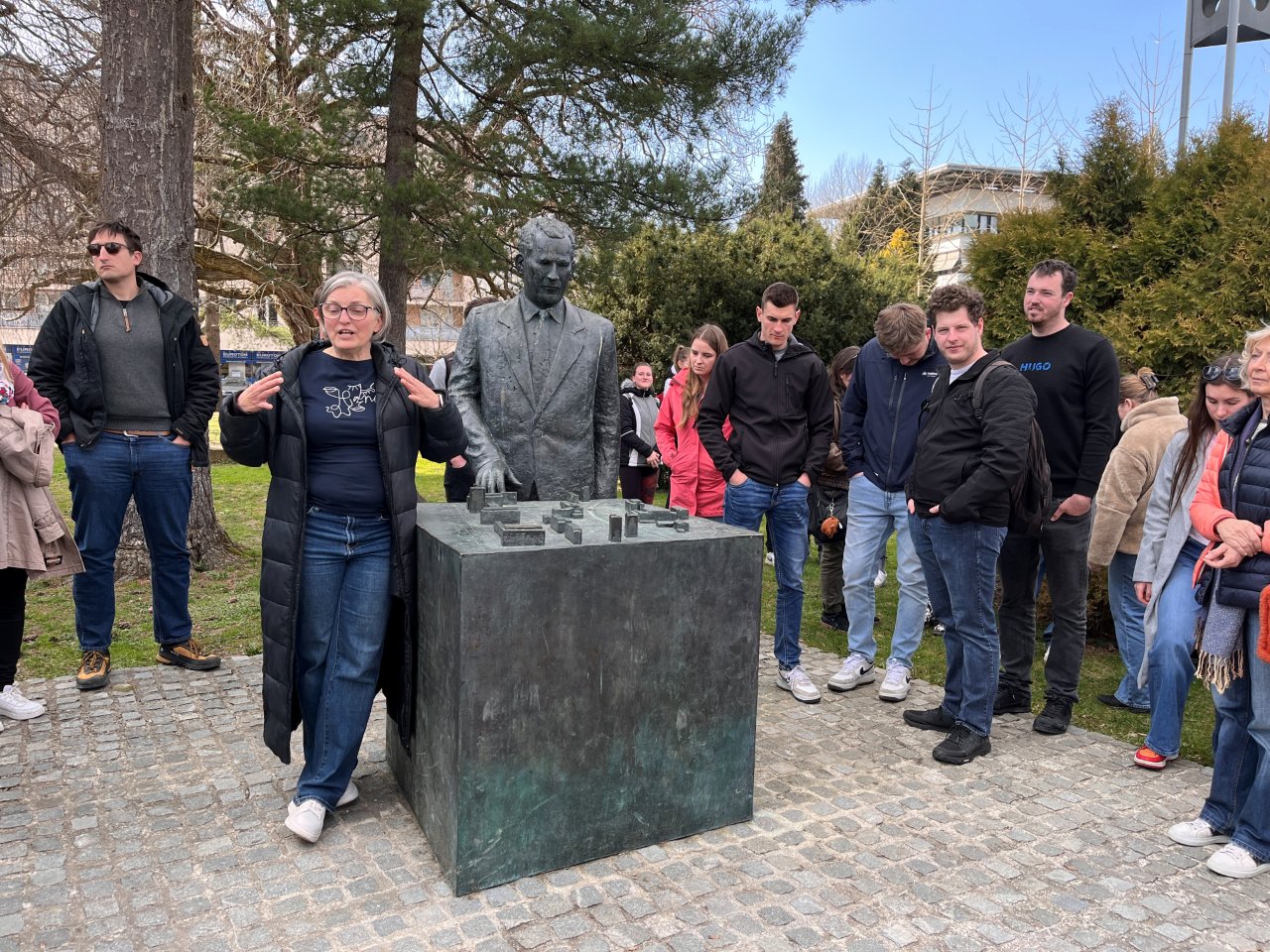
Nataša Dolejši, MSc with participants at the Nestl Žgank monument (photo: Schmitzer)
Within the renovation area, two mature London plane trees (Platanus × acerifolia) have been preserved, while ginkgo trees (Ginkgo biloba) were transplanted to a new location. Field maples (Acer campestre) were first relocated to a temporary site and later replanted at their final positions along the renovated street. The designers followed the principle of maximum preservation of existing vegetation, although site conditions required numerous adjustments. Weekly coordination meetings between the investor, contractors, and designers proved essential for resolving ongoing challenges.
Challenges related to the plane trees arose early in the construction phase. Due to the planned route of construction machinery, it was not possible to install protective fencing at the recommended distance from the tree canopy. Therefore, experts used the air spade method to expose and assess the root system and to implement targeted protection measures. Larger roots were absent in certain areas, likely due to interventions during the square’s renovation approximately 30 years ago. Roots with a diameter greater than 2 cm damaged during construction were treated with a fungicidal coating. During summer, the roots were additionally protected with fabric covers to prevent desiccation and were regularly irrigated.
Due to the presence of major roots, a modification of the design was proposed to allow more space for root growth and reduce damage. The designers supported this proposal and adjusted the layout of supporting structures and routes near the trees. Radar root scanning was attempted but proved ineffective due to dense underground infrastructure. To ensure stability, the trees were additionally anchored to concrete blocks.
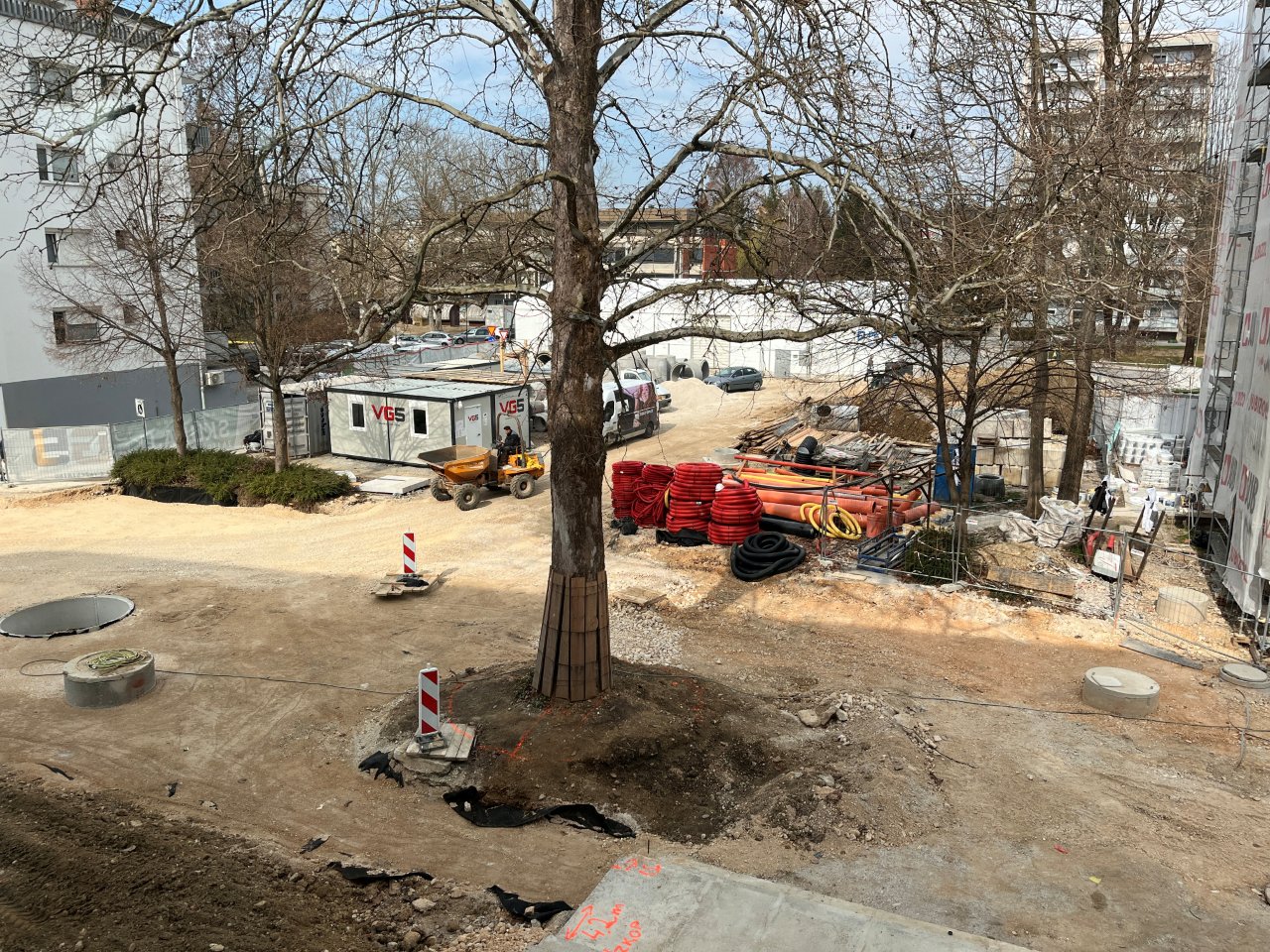 A preserved plane tree with a protected trunk (photo: Schmitzer)
A key technical element of the project is the implementation of the Stockholm tree planting system, which provides improved conditions for tree growth in urban soils. In early 2026, excavation to a depth of 1.5 m was carried out, followed by the placement of geotextile at the base. The use of construction fabric is generally discouraged in European urban open-space projects, especially in pedestrian areas. The multi-layer installation itself was properly executed: crushed stone (90–150 mm) was placed and compacted in 20 cm layers, with a thin layer of substrate added at each stage and washed into the voids using a strong water jet. Unfortunately, the investor did not approve funding for specialized substrate typically used in the Stockholm system. Instead, substrate mixtures were prepared on site, which is less ideal due to difficulties in achieving uniform composition. Considering the additional time required for mixing, the cost difference compared to specialized substrate would have been minimal. The substrate used consisted of 50–70% sand, about 20% soil, a small percentage of clay, and biochar. The latter promotes mycorrhizal activity, improves nutrient retention, and enhances urban soil quality.
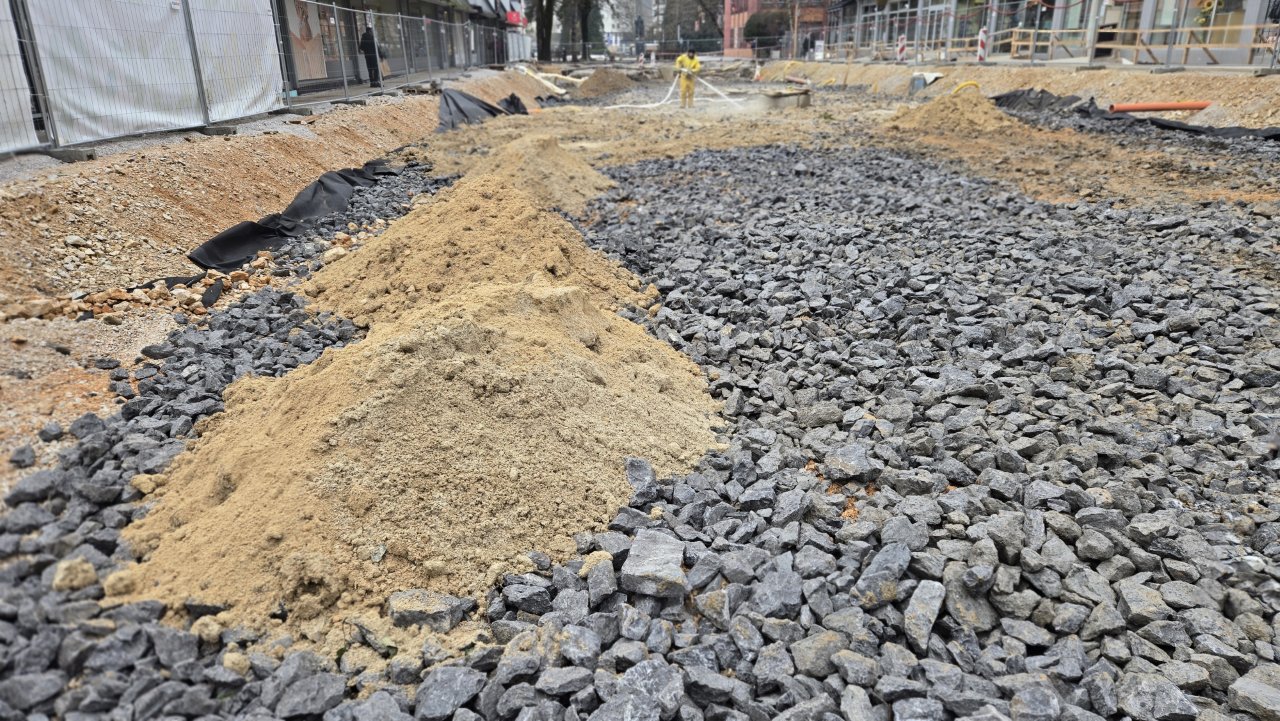 Implementation of the Stockholm system with substrate application and injection into compacted crushed stone layers (photo: Dolejši)
Mature field maples (Acer campestre) were first transplanted in summer 2025 to a temporary location and later to their final positions. The original surface of Cankarjeva ulica was paved, water infiltration to the roots had been limited, resulting in poorly developed root systems. During transplantation, the crowns were significantly reduced to maintain balance between above-ground and below-ground portions. Excavation took place in summer heat, which is not optimal, and trees were lifted gradually using machinery, making root damage unavoidable. Each tree with its root ball weighed approximately 4 tons.
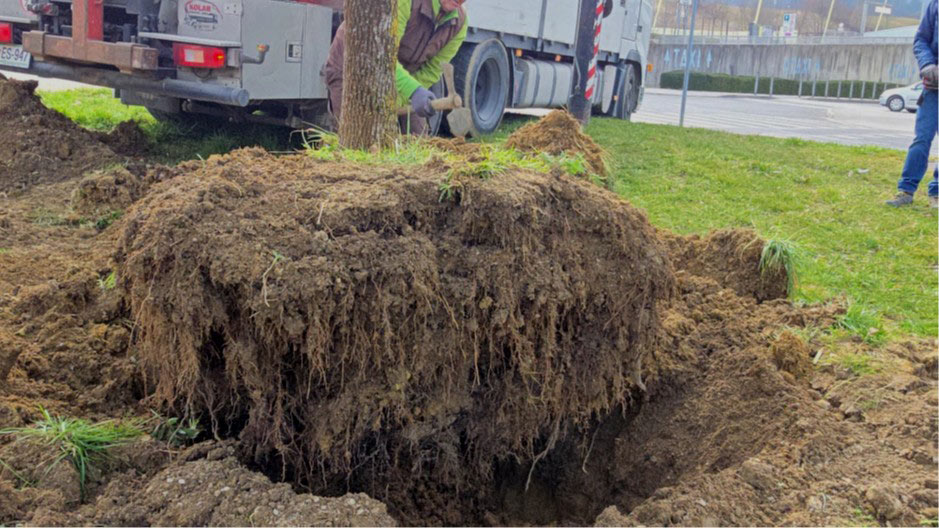 Professionally executed transplantation and aftercare are evidenced by numerous new roots (photo: Dolejši)
After excavation, the trees were transported to a nearby temporary meadow location on the same day, where they were correctly oriented, stabilized, and regularly watered. Despite challenging conditions, they performed well, as confirmed by the development of many new roots. However, during replanting at the final site, concrete planting pits (pipes) were installed on top pf the Stockholm system. While these facilitate construction, they restrict root expansion and reduce the effectiveness of the Stockholm system, which requires a continuous and well-aerated underground volume. Although the pipe diameter is adequate, their depth poses an obstacle to root growth. Recommended perforation of the lower parts, which would enable horizontal root expansion, was not carried out due to cost constraints. Additionally, experts warned against raising the soil level by adding a 20 cm substrate layer above the root zone, as this can negatively affect soil air-water balance, especially in transplanted mature trees.
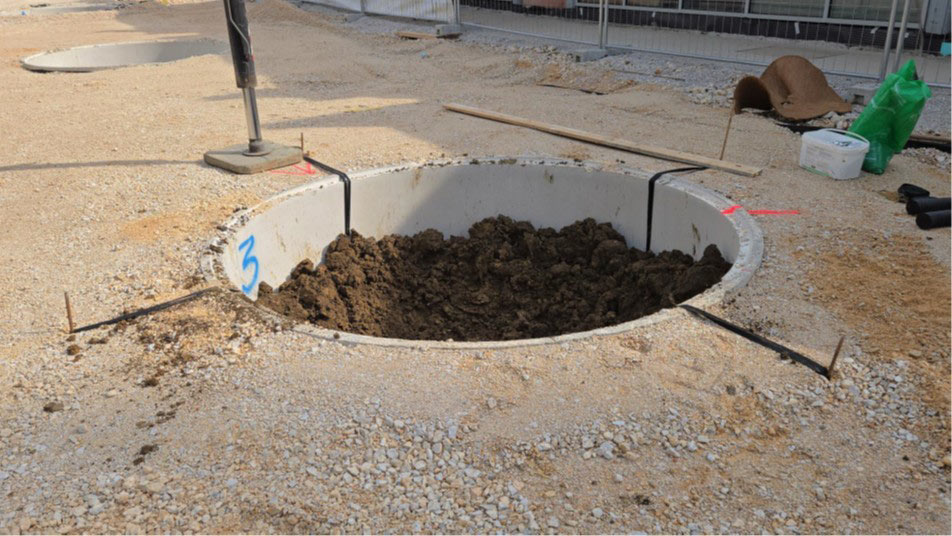
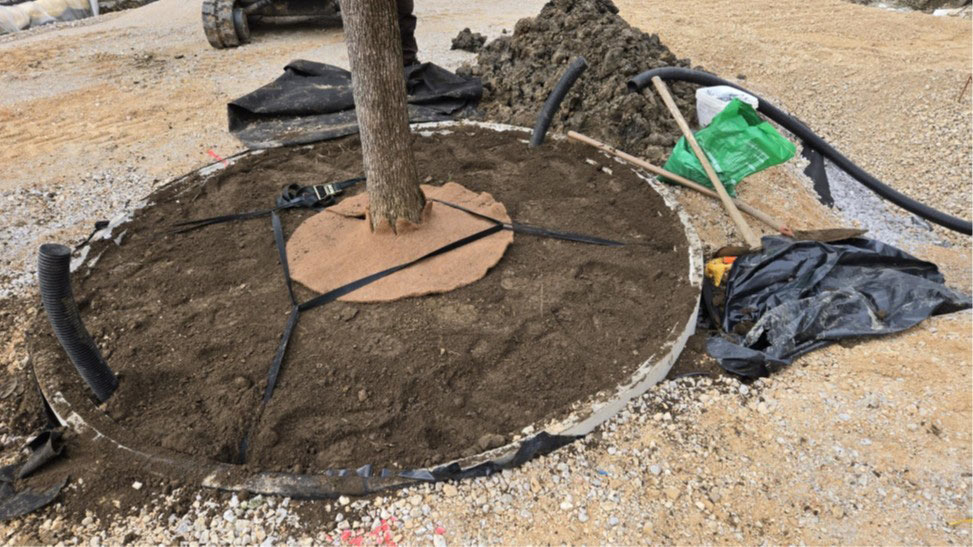
Concrete pipes within the Stockholm system limit optimal root development (photo: Dolejši)
The transplantation of approximately 30-year-old ginkgo trees (Ginkgo biloba) was similarly demanding. Some specimens exceeded 15 m in height and had to be reduced to about 9 m to enable transplantation. Despite this, they adapted relatively well due to their shallow root systems. Special attention was also given to identifying and excluding female trees, as their fruit can cause maintenance issues.
The project also includes a rainwater harvesting system with a larger storage tank and the creation of a rain garden. However, the area will remain predominantly paved with impermeable materials (concrete pavers up to 25 cm thick), preventing direct infiltration of rainwater to tree roots. Experts therefore emphasize that permeable surfaces would be a more suitable and sustainable solution in the long term. The renovation of Cankarjeva Street represents an important step toward more modern and sustainable urban design, while also highlighting the complexity of balancing construction, landscape architecture, and environmental requirements. The project will serve both as an example of contemporary practice and as a basis for improvements in future similar developments in Slovenia.
Further details on the construction process and the implementation of the Stockholm system are available via the links below:
Projekt trajnostna mobilnost – PRENOVA CANKARJEVE ULICE BTF >>
