
News
IN MEMORIAM – Farewell to Professor Šiftar
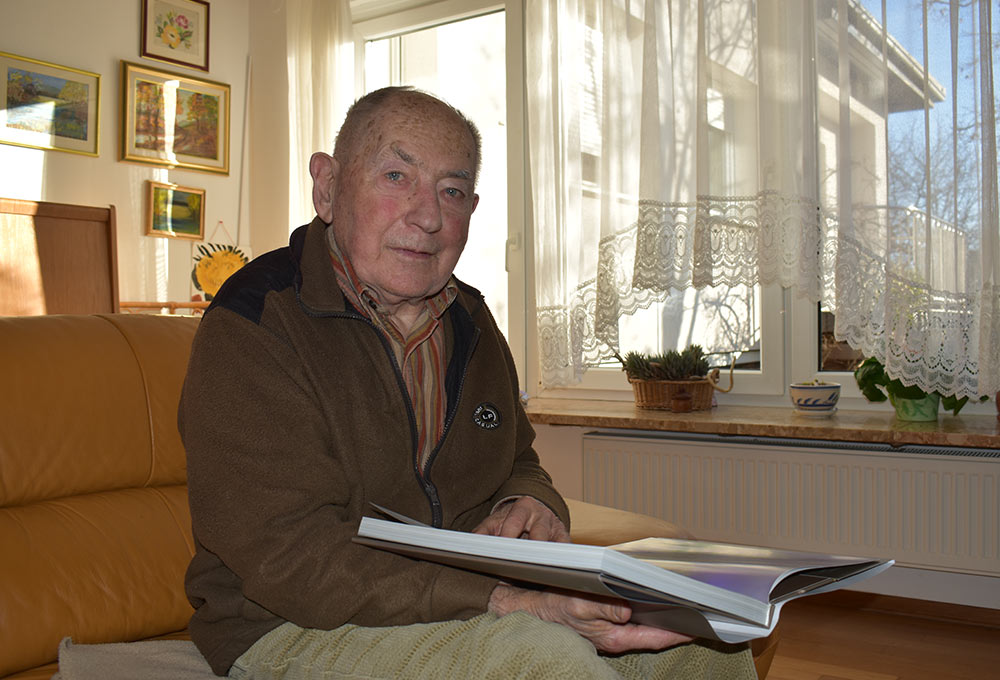
In the last week of March, we were deeply saddened by the news of the passing of Professor Šiftar. We have lost an outstanding expert, a remarkable human being, and above all, a gardener in the truest sense of the word. He was distinguished by an exceptional knowledge, always accompanied by humility and approachability. In every professional discussion he took part in, it was evident how vast his knowledge was, yet he also knew how to listen and connect different fields. He had a profound insight in horticulture, while his expertise extended across many areas of agriculture, enabling him to take a holistic view and seek solutions to problems.
His professional path was shaped by learning from and collaborating with leading experts in agriculture. He graduated from the Biotechnical Faculty (Department of Agronomy) in Ljubljana and completed his PhD under another distinguished agronomist, Professor Adamič. For more than 20 years, he led the municipal nursery in Murska Sobota (Vrtnarstvo Murska Sobota). He lectured at three universities—University of Ljubljana, University of Maribor, and University of Zagreb—participated in numerous projects related to urban landscape development, and served as a court expert, among many other roles. His work left a lasting mark both on the profession and on the landscape itself.
As a lecturer and mentor, he passed on his knowledge to many generations of students. During my studies, I unfortunately did not have the opportunity to attend his lectures, as I chose a different study major. I first met him as the reviewer of my diploma thesis. Later, as a young teaching assistant, I attended his lectures. These were lectures that demanded constant attention as he translated theoretical knowledge into practical application, and even today, as a lecturer myself, I often recall his insights and pass them on to my students.
Professor Šiftar was also closely connected to my own research work in nursery propagation, particularly in studies on rooting and vegetative propagation of more challenging woody species. This interest stemmed in part from his doctoral research, in which he optimized methods of vegetative propagation of smoke tree (Cotinus coggygria). He remained deeply interested in developments in the propagation of woody plants throughout his career. We often discussed the propagation of sweet chestnut (Castanea sativa), especially his innovative method—developed together with colleagues at Vrtnarstvo Murska Sobota—of grafting onto germinating seeds, which he also published. For his extensive scientific and professional contributions, he received several prestigious awards, including the Boris Kidrič Fund Award for inventions and improvements, the Jesenko Award, and the Lifetime Achievement Award of the Slovenian Association of Landscape Architects.
In the later period of his distinguished career, he devoted himself intensively to research on the origin of various pear species (Pyrus spp.) found in Slovenia. He was well known for his statement that Slovenia’s national emblem should feature a pear leaf rather than a linden leaf, as the diversity of pear species and types is so characteristic of the country. His research on the origin of the snow pear (Pyrus nivalis) attracted considerable attention and continues to spark discussion today. While modern research in this field relies heavily on advanced genetic analysis, professor Šiftar based his work on careful morphological measurements—through observation, and with nothing more than a measuring tape and a camera in hand!
Strengthening collaboration among professionals in ornamental horticulture was always one of his key aspirations. He worked closely with growers and was active in various professional assemblies: the Slovenian Association of Horticulturists, Botanical Garden, Arboretum, and elsewhere. Wherever he went, he was a warmly welcomed guest and a highly respected lecturer.
He can also be considered one of the founding figures of the Association of Ornamental Plant Producers of Slovenia (ZPORS). Discussions with him about the importance of professional collaboration were among the key drivers behind the idea of establishing the association. He was also an invited speaker at the founding meeting of ZPORS in 2010. I am convinced that he would have been pleased with the development of ZPORS over its 16 years of existence, and especially with the fact that it has fostered professional dialogue and collaboration in shaping the future of ornamental horticulture in Slovenia.
Professor Šiftar, you will be deeply missed—in professional discussions, in scientific reflection, and beyond. Yet you remain an enduring and important part of all these endeavors.
prof. dr. Gregor Osterc
Photo: Stanka Dešnik
